


The Penny Black
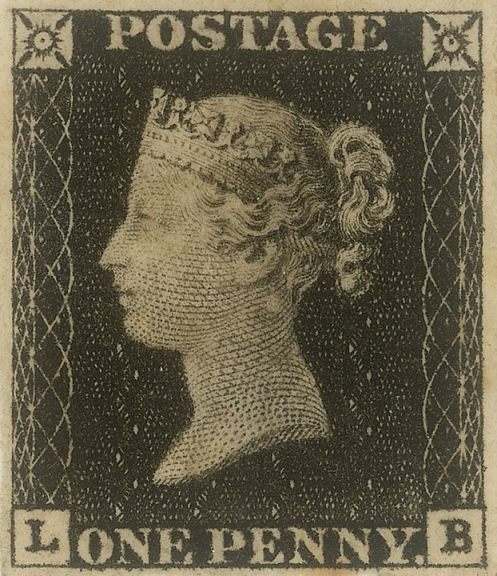
The design for the 1d label was based upon an engraving by William Wyon featuring the head of a young Queen Victoria, originally produced for the City of London medal.
Wyon was the finest medallist of his time. His detailed work was chosen to make forgery more difficult, and security was enhanced with expensive engraving. Space for corner ornaments and the value were added to the design.
A printing plate was made by rolling the image from the die 240 times (240 pennies making £1). Then individual pairs of letters were punched in on the plate making each stamp different, to prevent re-use. The 'Old Original' master die is still part of the BPMA collection, but all printing plates were destroyed.
Printing, in recess (or intaglio), on watermarked paper began in mid April 1840. Once dry the sheets were gummed. The Penny Black went on sale in London on 1 May 1840, becoming valid for postage on 6 May.
- Illustration

The Penny Black
You may also be interested in...
P.O. Headquarters

The Post Office maintained a central filing system for much of its history
These records cover national and international events and trends, new developments and mail operations on the ground.
Timeless & Classic

An online exhibition looking at one of the most famous stamps in the world
Tracing the evolution of Arnold Machin's definitive stamp design from conception to international icon.


