


The Penny Black
The stamp seems a simple notion, yet it wasn't until the late 1830s that social reformer Rowland Hill suggested "a bit of paper just large enough to bear the stamp, and covered at the back with a glutinous wash". Hill matched this with the radical principle that a standard letter could be sent anywhere in Britain for one penny, opening up the world of letters and literacy to millions of people.
The Phillips Collection is the greatest specialist collection of Victorian Great British stamps, gifted by Reginald M Phillips to the nation in 1965. The BPMA now cares for this collection. It charts the development of Hill’s big idea from design to different experiments with production, and from the iconic Penny Black to the 'Jubilee' issue of 1887.
Find out more about the penny black.
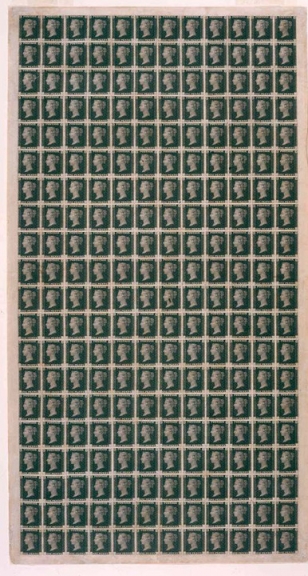
Penny Black proof registration sheet
(below left) Complete proof sheet of the Penny Black before corner letters were inserted in the plate. The BPMA cares for the only Penny Black proof sheets in the world.
Date: 1 April 1840
Catalogue Reference: VR 90
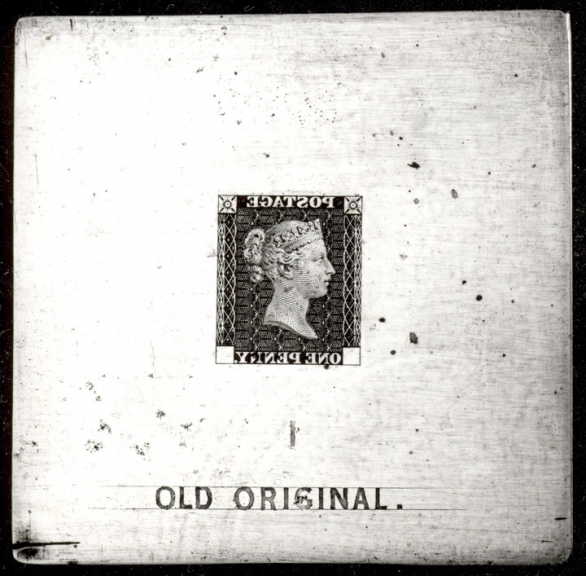
Old Original Die
(below centre left) The 'Old Original' die from which all Penny Black plates and most Penny Reds were made.
Date: 1840
Catalogue Reference: OB1998.0391
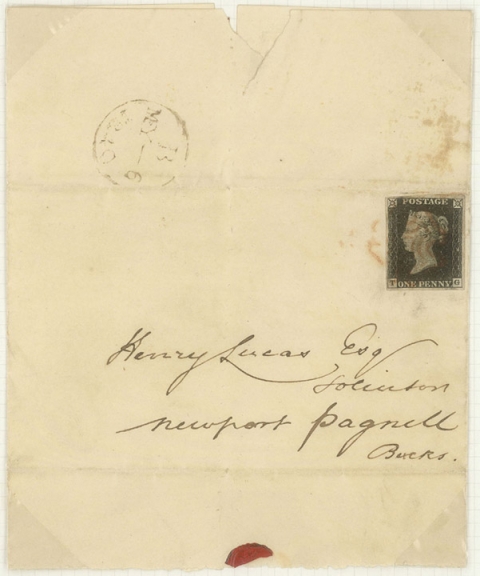
Penny Black First Day Cover
(below centre right) The first 'First Day Cover' in the world, showing a Penny Black used on 6 May 1840, the first day of validity.
View this in the Phillips Collection: Vol IV/3
Date: 6 May 1840
Catalogue Reference: POST 141/04
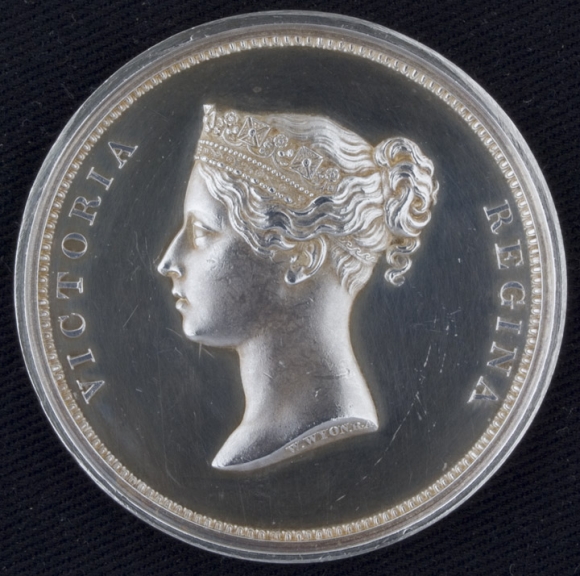
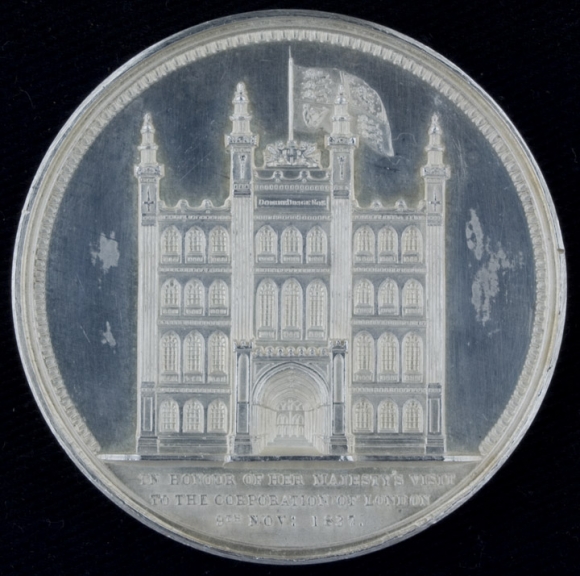
Silver Wyon medal
(below right) Queen Victoria's head was used on the first postage stamp in an attempt to prevent forgery. It was based on the City Medal by William Wyon, the foremost medalist of the time.
View this in the Phillips Collection: Vol XLVII
Date: 1837
Catalogue Reference: POST 141/51
- Illustrations

Penny Black sheet
Old Original Die
Penny Black First Day Cover
Silver Wyon medal (front)
Silver Wyon medal (verso)
You may also be interested in...
The Phillips Collection

The essential resource for understanding stamps of the Victorian era
Reginald M Phillips' award-winning collection of British Victorian stamps, digitised, online and now fully searchable.
Postal Reform

A must for those with an interest in Victorian philately
An insight into the period leading to the issue of the Penny Black and the Mulready Covers in 1840.
Rowland Hill's reforms

The story of prepaid postage and the first postage stamps
The reforms introduced by Rowland Hill in the Victorian period changed the face of the British postal service for ever.


