


What was it like to work on a TPO?
"It's not a job, it's a way of life."
- Ernie Gosling, TPO Sorter, 1990
When the mails were first transported by rail, the mail guard continued the practice from the horse-drawn mail coaches and took his seat on the roof of the carriage. In July 1837, approval was given for 'shades for the eyes' to be provided to the unfortunate mail guards, to provide protection from 'the wind and cinders, or rather sparks from the chimney of the steam engine.' After several years, the guard was moved to escort the mails from within the carriages.
From the outset, the TPO required a special type of worker. Post Office employees called railway clerks sorted the letters on early TPOs. The arrangement, tying, sealing, despatch and receipt of mail bags was carried out by mail guards.
In 1860, the system of clerks and mail guards changed to one of sorters with clerks acting as superintending officers. The mail guards now found that they were not required in the new regime, though a large number were trained up and transferred to the class of 'sorterships'.
Dancing up and down
Work on the TPOs was both dangerous and demanding. In the 19th century, fumes from the oil lamps and melting wax (used for sealing bags) caused respiratory problems. A large number of sorters were forced to retire from the service due to ailments that were attributed to 'the peculiar character of their duties.' These ailments included, 'loss of memory, congestion of brain and spine, paralysis', and 'injury to the spine and nervous system.'
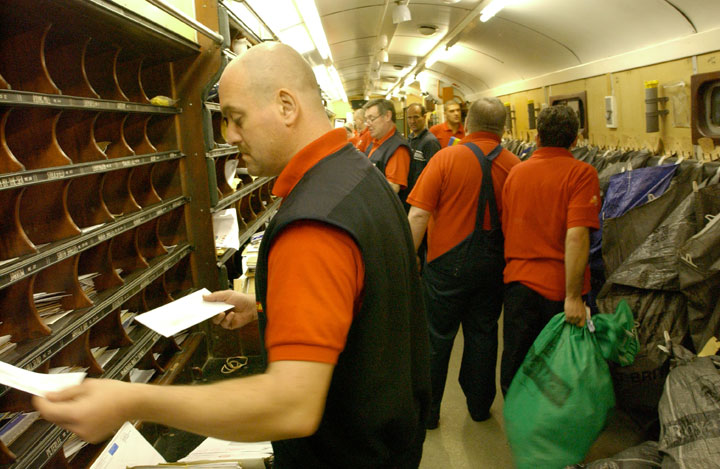
"We'd get flung around a lot and you were constantly bracing yourself against the lurching of the train. You got used to that, though you never actually liked it! You learned to work around each other, almost like a dance routine."
- Bill Barnet, Sorter on the Great Western Up and Down, 2004
- Illustrations

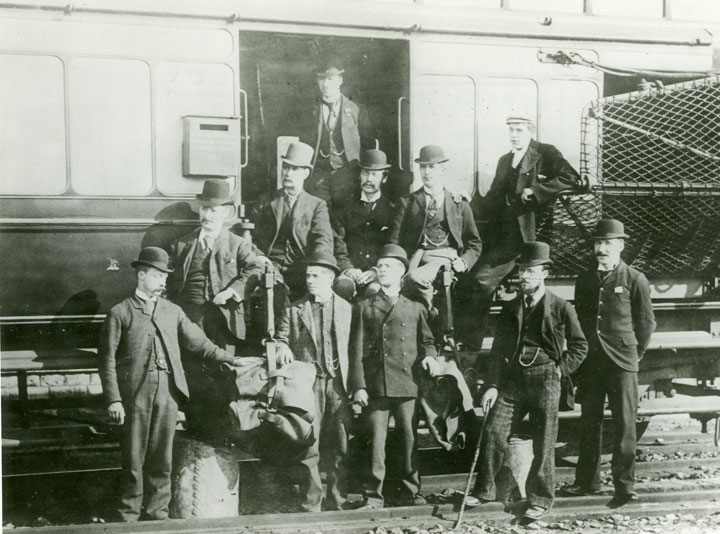
Great Western TPO crew, 1887
TPO crew sorting mail, 2004
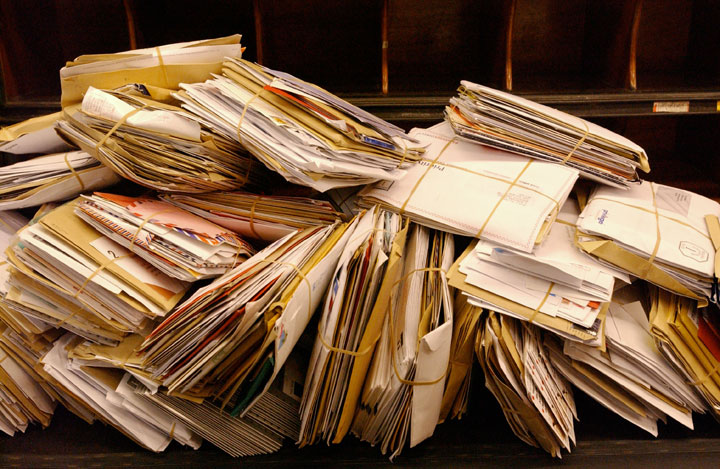
Bundles of letters
You may also be interested in...
Mail Trains

A history of the overland carriage of mail by rail
From the 1830s the Post Office relied increasingly on rail to achieve an efficient transit of the nation's mail.
Victorian Innovation
The Victorian era transformed the British Post Office
This online exhibition charts the development of the first postage stamp, the revolution in postal transport and more.


